
Saddle Stitch Method

Figure-Eight Pattern
The saddle stitch employs two needles passing through a single hole in opposite directions, creating a figure-eight pattern. This method forms independent stitch lines on each side of the material, meaning if one thread fails, the other maintains the connection.

Non-Fail Data Link
Unlike machine stitching that creates a single continuous thread, the saddle stitch creates redundant connections. Each stitch point functions independently, ensuring that localized damage does not compromise the entire seam's integrity.
Technical Advantages
Tension Control
Hand stitching allows precise tension adjustment at each stitch point. The craftsperson can adapt tension based on material thickness and intended stress distribution, creating optimal seam characteristics.
Thread Selection
We select thread materials based on intended use and stress requirements. Thread diameter and material composition are matched to the leather thickness and expected load patterns.
Stitch Spacing
Stitch density is calculated based on material properties and stress points. High-wear areas receive increased stitch frequency, while low-stress zones maintain standard spacing for efficiency.
Reinforcement Strategy

High-Wear Areas
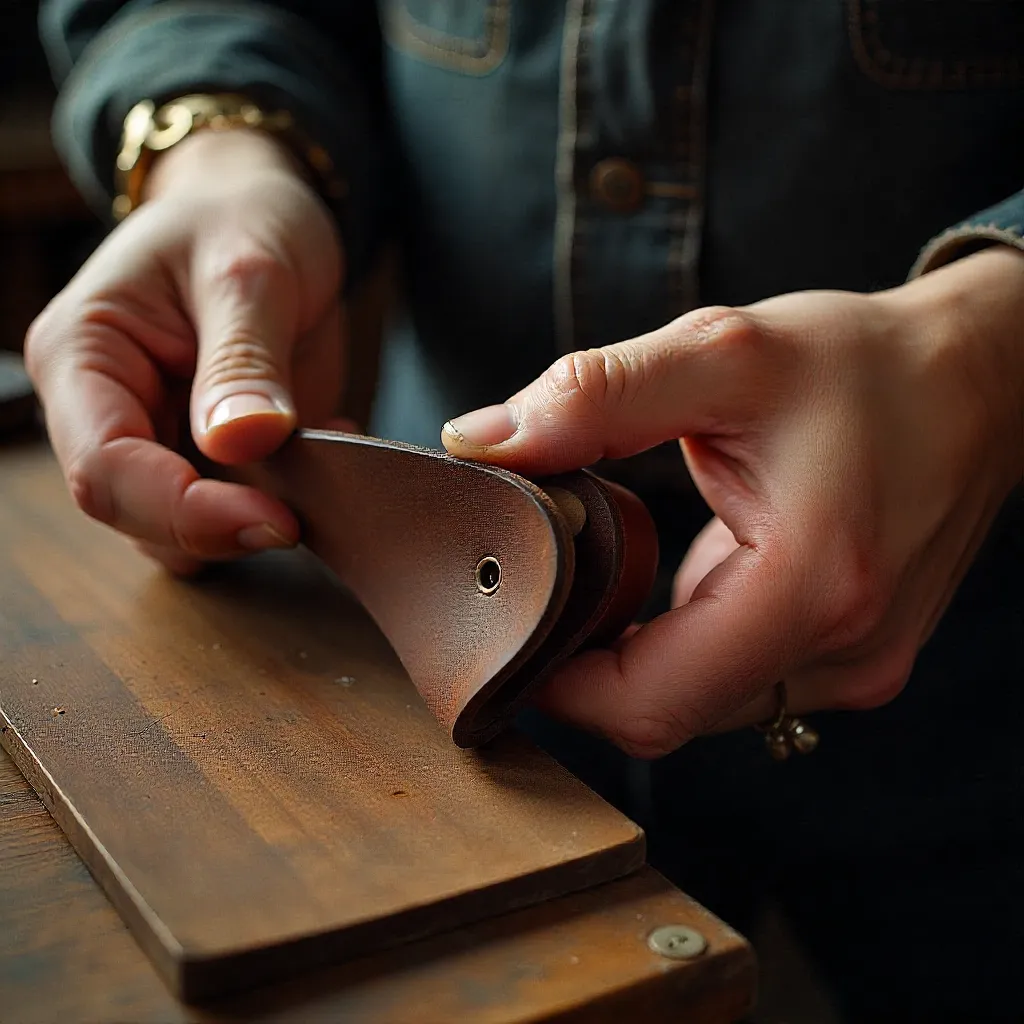
Corners, edges, and attachment points receive additional reinforcement stitching. These areas experience concentrated stress during use, requiring enhanced structural support to prevent failure.
Stress Distribution
Reinforcement patterns are designed to distribute stress evenly across the material surface. This approach prevents localized failure points and extends the overall product lifespan.
Machine Limitations
Single Thread Constraint
Machine stitching creates a single continuous thread loop. If any point along this loop fails, the entire seam becomes compromised, creating a potential failure cascade.
Tension Uniformity
Machines apply uniform tension across the entire seam length. This approach cannot adapt to varying material thickness or stress requirements at different points.
Pattern Rigidity
Automated processes follow fixed patterns without adaptation. Hand stitching allows real-time adjustment based on material characteristics and structural requirements.